
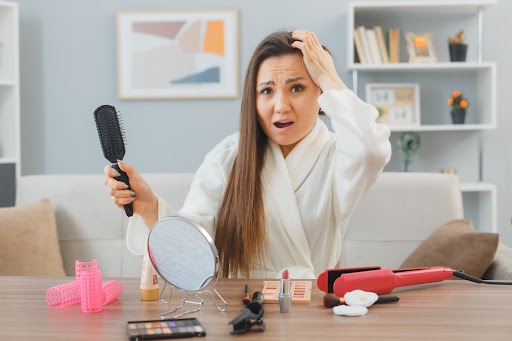
Hair shedding is a normal process where 50 to 100 hairs fall out naturally whereas hair loss takes place when the hair cycle is disrupted. Understanding the differences is important to make the right choice.
Key Takeaways
- Root Indicators: Shed hair naturally detaches from the scalp and features a small white bulb at the tip, whereas broken hair fragments lack a bulb entirely.
- Visual Differences: Hair shedding results in a uniform, temporary loss of overall volume across the entire scalp, while hair loss presents as targeted thinning, widening parts, or visible bald patches.
- Underlying Triggers: Shedding is typically catalyzed by short-term physical or emotional stressors and hormonal shifts, while permanent hair loss is primarily driven by genetics, autoimmune issues, or chronic physical tension.
- Simultaneous Conditions: It is entirely possible to experience both progressive genetic hair loss and an acute episode of temporary hair shedding at the same time.
Are you noticing an alarming amount of hair on your pillow or in the shower drain? Before you panic, it is crucial to recognize that not all hair fall is equal. Many people confuse everyday hair shedding with progressive hair loss. While shedding is a normal, healthy part of your body’s cellular turnover, true hair loss is a structural condition that disrupts future growth.
In this blog, we will offer a comparative evaluation of hair shedding and hair loss.
What are the Main Stages of the Hair Growth Cycle?
The key stages of hair growth cycle are:
Anagen (The Growth Phase): This is the active phase with a rapid division of hair root. Here, new hairs are pushed up through the scalp and follicle. This lasts between 3 to 7 years. Around 85% to 90% of the hair is growing in this phase at any time.
Catagen (The Transition Phase): This phase indicates the end of active hair growth where hair is detached from its primary blood supply. The duration of this phase is about 10 days. The proportion in this phase is less than 3% of your hair.
Telogen (The Resting Phase): This is a dormant period where no new hair growth takes place but hair remains stuck to the follicle. Well, the formation of new hair is seen beneath it. This lasts for 3 months and around 10% to 15% of hair follicles are in this phase.
Exogen (The Shedding Phase): In this final stage of hair cycle, old hair detaches from the follicle and falls out. The cycle resets, and the follicle returns to the Anagen phase for new hair growth.
What to Know About Hair Shedding?
Hair shedding refers to a normal physiological process where old strands naturally clear out to make room for the next generation of growth. Losing roughly 50 to 100 hairs per day is completely normal and expected.
When your body undergoes an acute physical or emotional shock- such as high fever, surgery, severe nutritional deficiencies, or postpartum hormonal drops- it can prematurely shock up to 70% of your active growth follicles into a resting state. This condition, known as Telogen Effluvium, results in sudden, heavy shedding that typically peaks three months after the triggering event. Because the underlying hair follicle remains perfectly healthy and intact beneath the scalp, this shedding is temporary and resolves naturally once the root cause is addressed.
Main Characteristics
Shedding is usually diffuse and hair falls evenly from all over the scalp. Shed hairs have a small, bulb-shaped tip at the root that signals the completion of the growth cycle.
Shedding is temporary and it resolves on its own when the underlying cause is addressed. Hence, this will not lead to permanent bald spots. As the hair follicles remain active, hair regrows without the need for any medical intervention.
Key Causes
The common hair shedding causes are:
Systemic Stress: Severe physical shocks (like high fevers or surgeries) or intense emotional pressures can prematurely disrupt the growth cycle, causing active hairs to enter the resting phase simultaneously. This triggers diffuse hair shedding roughly 90 days after the event, rather than structural hair loss.
Hormonal Shift: One of the key causes of hair shedding is hormonal shift. Have you given birth to a child? If so, there is a chance that you can witness hair falling a bit more. This refers to postpartum shedding. Well, this is a temporary phase.
Nutrient Deficiencies: A poor diet can trigger hair shedding. If your body has a low iron-level, or your regular diet lacks protein or Vitamin D, you can experience hair shedding.
Actionable steps
Because temporary hair shedding (Telogen Effluvium) is a systemic reaction to a specific physical or metabolic shock, stopping it requires stabilizing the body’s internal environment and protecting vulnerable follicles. Follow this four-step recovery protocol to encourage natural regrowth:
- Optimize Key Nutritional Biomarkers: Hair follicles are among the most metabolically active tissues in the body, meaning they are the first to lose resources during a nutritional deficit. Ensure your daily diet features high-quality proteins (the structural building blocks of hair keratin) and target key blood levels: maintain serum ferritin (stored iron) levels above 50 ng/mL, alongside optimal levels of Vitamin D3, Zinc, and B-complex vitamins.
- Minimize Mechanical Friction and Tension: When up to 70% of your hair is shocked into the resting phase, the roots are resting loosely inside the follicle walls. Avoid high-tension styles like tight buns, braids, or ponytails that physically pull these loose strands out prematurely. When detangling, always use a wide-tooth comb or flexible wet brush, starting strictly at the ends and working your way up to the roots to eliminate tugging.
- Eliminate Harsh Chemical and Thermal Stresses: Switch to sulfate-free, pH-balanced anti-inflammatory shampoos that protect the scalp’s natural lipid barrier. Limit your use of high-heat styling tools (like flat irons and blow dryers) to 180°C or below, as excessive heat compromises the hair shaft, leading to cosmetic breakage on top of your existing root shedding.
- Support the HPA Axis and Document the Lag Time: Telogen Effluvium operates on a strict 90-day biological delay. The hair falling out today was actually shocked out of its growth phase roughly three months ago by a past illness, crash diet, or stressful event. Prioritize sleep quality and cortisol-lowering adaptogens to stabilize the Hypothalamic-Pituitary-Adrenal (HPA) axis, keeping in mind that the shedding will naturally taper off once the trigger passes out of your system.
What to Know About Hair Loss?
Hair loss (Anagen Effluvium/Alopecia) is a condition where the hair growth cycle is interrupted. Hair follicles shrink, become dormant and new hairs are not produced.
Main Characteristics
Unlike temporary shedding, progressive hair loss is defined by a gradual reduction in individual hair strand diameter, a process known as follicle miniaturization. Instead of an even, all-over thinning, true hair loss presents as structural pattern changes- such as a receding hairline, widening parts on the crown, or localized bald patches where follicles have entered a dormant state and stopped producing new shafts entirely.
Key Causes
The main causes include:
Genetics and Hormonal: Androgenetic alopecia (male- and female-pattern baldness) is the most common hair loss form. This progressive condition is caused by the DHT (dihydrotestosterone) hormone that downsizes hair follicles. This contributes to gradual hair density reduction.
Autoimmune Conditions: Alopecia Areata is an autoimmune disease where hair follicles are mistakenly attacked and that results in bald patches. This overreaction of the immune system is a common hair loss cause.
Tight Hairstyles: Do you prefer tight hairstyles like buns, braids, or ponytails? If so, you can witness hair loss. This is called traction alopecia that is caused by continuous or repetitive pulling.
Actionable Steps
At Capillaire MD, we look past surface-level symptoms to target the biological triggers of progressive thinning. Based on a comprehensive scalp analysis, our medical professionals design multi-layered treatment strategies tailored to your specific type of alopecia:
- Targeted Topical Therapies: Prescription-strength Minoxidil formulations and specialized hair growth factors designed to prolong the active Anagen (growth) phase.
- Systemic Hormone Regulation: Oral options like Finasteride or Spironolactone to block DHT from binding to and shrinking your hair follicles.
- Advanced Clinical Modalities: Platelet-Rich Plasma (PRP) therapy to deliver localized growth factors directly to the roots, alongside specialized medical LED phototherapy to stimulate cellular metabolism inside dormant bulbs.
If the discussed treatments fail, your doctor will recommend hair transplantation.
How Hair Thinning Differs in Hair Shedding and Hair Loss?
Hair thinning is a visual symptom in both hair shedding and hair loss. Let’s understand.
Hair Shedding: The overall volume of hair is dropped in hair shedding. Your ponytail might feel lighter but the hairline remains intact.
Hair Loss: Referring to hair loss, certain areas become sparse or see-through. For instance, you might witness a wider part line on the top of the scalp.
Shedding vs. Loss vs. Breakage: How to Tell the Difference?
Here is a comparison between hair shedding, hair breakage, and hair loss.
| Diagnostic Feature | Temporary Hair Shedding (Telogen Effluvium) | Progressive Hair Loss (Androgenetic Alopecia) | Structural Hair Breakage (Cosmetic Damage) |
|---|---|---|---|
| Root Tip Appearance | Features a distinct, fully formed white keratin bulb (club hair). | Features a white bulb, but the entire strand is notably thin, short, and fine. | Completely blunt or frayed ends with no white root bulb present. |
| Shedding Pattern | Diffuse thinning across the entire scalp; intact hairline. | Targeted thinning along the crown, frontal hairline, or a widening part line. | Localized to areas exposed to high heat, chemical bleaching, or tight styles. |
| Long-Term Follicle State | Follicles remain fully active and naturally enter a new growth phase. | Follicles progressively shrink (miniaturize) and eventually become dormant. | Follicles are completely healthy; damage is strictly isolated to the external hair shaft. |
| Regrowth Potential | Excellent; typically returns to baseline density within 6 to 9 months. | Requires medical treatments (Minoxidil, Finasteride, or PRP) to restore density. | Requires trimming split ends and adjusting your daily cosmetic hair care routines. |
Table: Hair Shedding vs. Hair Loss vs. Hair Breakage
When to See a Dermatologist?
Contact us if you witness the following signs.
- Shedding lasts for more than 6 months
- Noticing patches of smooth and completely bald skin
- Itchy, painful, or flaky scalp
Clinical Tip: If you look at your fallen hair strands and notice the white keratin bulb is present, but the strand itself has become incredibly short, wispy, and ultra-fine compared to the hair on the back of your head, you are likely witnessing the early stages of follicle miniaturization (progressive hair loss) rather than basic seasonal shedding.
To Conclude
Hair shedding is normal and it is triggered by stress and hormonal shift whereas hair loss is excessive shedding and that is caused by genetics, autoimmune conditions, and tight hairstyles. Hair shedding is not a concern but hair loss must be addressed.
Dealing with a Hair Problem?
We are a leading hair clinic in Canada for hair loss treatment. Visit us, and interact with our experts. Obtain the right treatment and get your lost hair back.
Frequently Asked Questions (FAQs)
1. Can Temporary Hair Shedding Leads to Permanent Hair Loss?
In short, no. This is because hair shedding is a temporary reaction to a particular trigger where the hair follicles remain healthy. If you are genetically predisposed to male or female pattern baldness, a severe episode of shedding can accelerate the early stages of genetic hair loss.
2. How to Identify whether my Hair is Shedding or Breaking from Damage?
You need to look at the strands closely that fall out. Shed hairs fallout from the root and you will see a little solid white bulb at one end. Broken hair occurs when the hair shaft snaps due to heat damage or dryness. Such strands are usually shorter fragments and will be devoid of any bulbs.
3. Does Seasonal Changes Affect How Much Hair I Shed?
In short, yes. Humans experience mild evolutionary seasonal shedding that peaks in the late summer and autumn (around August to October). During this period, more hair follicles enter the resting phase naturally. This leads to noticeable shedding that resolves in the winter.
4. Can Washing my Hair too Frequently Worsen Hair Shedding?
No, washing your hair does not cause shedding. This just releases the hairs that have already detached from the follicle and have loosened on the scalp. If you skip washing your hair for a few days, you will see more and more hair coming all at once in the next shower.
5. Can I Suffer from Both Hair Shedding and Hair Loss at the Same Time?
Yes, you can. While having progressive genetic hair loss, you can experience an acute episode of heavy hair shedding simultaneously due to a sudden stressful event, childbirth, or illness. Visit us for a scalp biopsy to find out whether both conditions are taking place together.
