
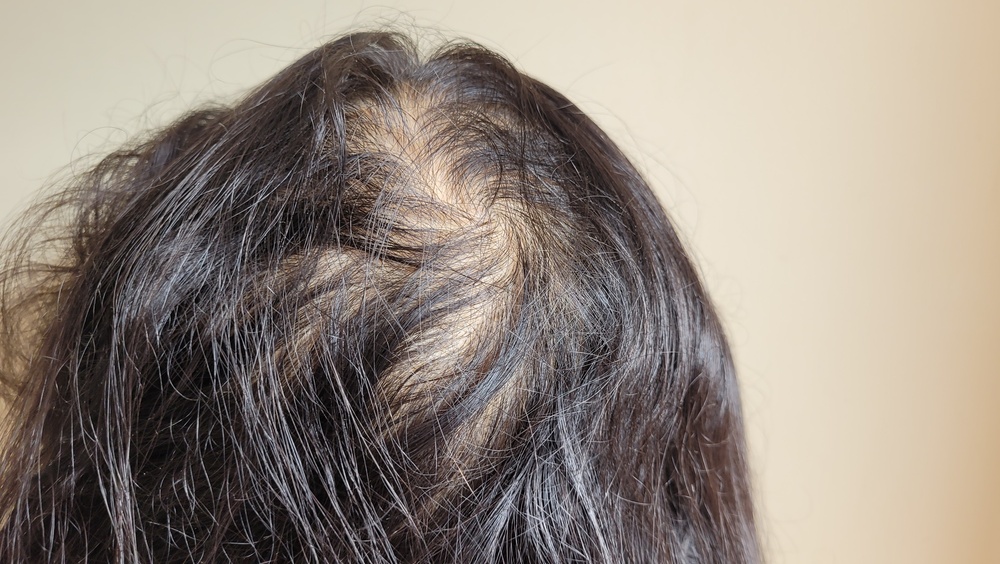
Androgenetic alopecia causes progressive, patterned hair thinning through genetic follicular miniaturization, whereas temporary shedding (telogen effluvium) causes a sudden, diffuse hair loss across the entire scalp due to stress or hormonal shifts.
Key Takeaways
- When hair starts to gradually thin over some months or years, and the hair part widens, then it is likely to indicate female pattern hair loss.
- If a person is experiencing sudden hair loss after 2 or 3 months of illness or stress indicates temporary telogen effluvium. The symptoms usually resolve in a period of 6 months.
- It is possible that both cases occur at the same time. An early assessment and intervention is necessary to identify the reason for hair loss. Treatment procedure should be started if your hair has not regained its density within 6 months
It is normal for women to lose hair on a daily basis (around 50-100 in a day), but new hair generally grows back to replace the loss. When lost hair is not replaced or the replacement rate is slower than the loss, it leads to hair thinning. This may be caused by androgenetic alopecia (female pattern hair loss), or it can be temporary shedding. However, only a clinical exam can confirm which type of hair loss it is, by identifying specific symptoms, understanding underlying triggers, and how early diagnosis can protect it.
Is it Female Pattern Hair Loss or Temporary Shedding?
To recognize which one you’re experiencing, first understand what Androgenetic Alopecia and Temporary Shedding (Telogen Effluvium) are.
#1 Androgenetic Alopecia
Androgenetic alopecia (female pattern hair loss or alopécie androgénétique chez la femme) is a common cause of gradual hair thinning in women. Over time, the hair follicles become smaller, causing each new strand to grow thinner, lighter, and shorter.
It develops gradually and is most noticeable along the central part and crown of the scalp. Unlike male pattern baldness- which often leads to a receding hairline or total top-of-scalp baldness- female pattern hair loss typically preserves the frontal hairline while causing diffuse thinning across the top of the head (often described using the Ludwig Scale or a “Christmas tree” pattern). Complete baldness in women is extremely rare.
#2 Temporary Shedding (Telogen Effluvium)
Telogen effluvium is a type of temporary hair shedding that can happen when a trigger factor causes many hairs to enter the resting phase simultaneously. These hair strands may shed after a few months, more noticeably.
Here is a breakdown of the phases it goes through-
- The growth stage: Active hair follicles grow hair during this phase.
- The resting phase: In this stage, your hair naturally goes through a cycle of growing, resting, and shedding.
- The trigger factors: Aspects like severe illness, stress, surgery, or hormonal changes can disrupt normal hair cycle.
- Telogen (Shedding stage): The inactive hair waits in the follicle until it sheds and a new hair takes its place.
However, in this case, hair follicles are not damaged. Unlike male pattern hair loss, the follicles do not gradually shrink and the shedding usually improves once the underlying trigger is resolved. It does not lead to complete baldness, but causes sudden overall hair shedding in women.
For a deeper look, see our page on telogen effluvium.
Here is a side-by-side comparison of both the hair thinning patterns-
| Feature | Androgenetic Alopecia (Female Pattern) | Telogen Effluvium (Temporary Shedding) |
| Onset | Gradual, over months to years | Sudden, over weeks |
| Trigger | Often none, but genetics and hormones play a role | Illness, surgery, fever, crash dieting, childbirth, major stress |
| Timing after trigger | Not linked to a single event | After 2 to 3 months |
| Areas it is highlighted | Crown and central scalp, hair part widens | Fairly even, whole scalp |
| Hairline | Usually preserved | Sometimes slight thinning |
| Shedding volume | Mild to moderate | Often heavy, noticeable in drain and brush |
| Duration | Progressive without treatment | Usually resolves in about 6 months |
| Regrowth | Needs ongoing treatment to maintain | Often regrows on its own |
| Family history | Common | Less common |
| Pull test | Usually negative away from thin areas | Often positive across the scalp |
Table 1: Androgenetic Alopecia vs. Temporary Shedding
Now that we understand the two conditions, let us look at the simple ways to check hair thinning patterns and signs at home.
Three Simple Ways To Monitor Hair Thinning Patterns At Home
Here are some simple ways you can monitor your hair thinning patterns at home-
#1 Take a time-lapse photo series of your hair parting
Take a photo of your hair part once a month, using the same lighting and angle each time. Compare the width of the part at the crown with the area toward the back of your head. A gradually widening hair part is a key indicator that distinguishes progressive pattern hair loss from acute temporary shedding.
#2 Try the gentle pull test
Gently hold around 50 to 60 hairs between your fingers and slowly slide your fingers from the roots towards the ends. Repeat the same in a few different areas of your scalp. But never pull or tug hard.
If several hair strands (over 10% of your grasp total) come away easily, it may suggest active shedding. When this happens across the scalp, it can be seen with telogen effluvium. If shedding is mainly noticeable around specific thinning areas, it may suggest a different pattern.
#3 Try the 60-second hair count
Comb your hair over a white towel for 60 seconds before washing it. Count the hair strands that fell out. Try doing this once a week under similar conditions. One day’s count may not tell you much, so it is better to look for changes or trends over time, preferably for 3 months.
Hair Shedding Over Time: Understanding the 3-Month Pattern
Hair grows in natural cycles. However, some triggers can cause many hair strands to enter the resting phase at the same time. The shedding usually does not happen right away. It may become noticeable 2 to 3 months later.
The delay can be confusing, as the event that triggered the shedding may have already passed.
Here is a typical hair shedding timeline you may consider for your observation pattern-
| Stage | What happens |
| Month 0 | Trigger occurs due to illness, surgery, childbirth, or any major stress factor |
| Month 2 to 3 | Heavy shedding begins |
| Month 3 to 6 | Shedding peaks, then slows |
| Month 6 to 12 | Visible regrowth and recovery |
Table 2: Hair Shedding Timeline
Once the underlying trigger has passed, acute telogen effluvium improves within 6 months. However, it may take more than 6 months for hair density to thicken noticeably. It is always a good idea to consult a clinician. Persistent shedding may be due to chronic telogen effluvium or another type of hair loss.
Causes Of Hair Thinning In Women
Temporary hair shedding in females can happen for many reasons. Common triggers include-
- Illness
- High fever
- Rapid weight loss
- Childbirth
- Thyroid problems
- Nutritional deficiencies
- Certain medications
- Major emotional or ongoing stress
In addition to these, hormonal changes can also play a role. Sometimes, no clear trigger factor can be found.
Female pattern hair loss is usually caused by a combination of genetics, age, and hormonal changes. Some hair follicles are more sensitive to androgens such as DHT. It causes them to gradually produce finer and shorter hairs.
You will also observe a widening hair part, more visible scalp, overall finer hair, or a smaller ponytail. However, the front hairline will remain mostly intact.
Note: It is possible to have both conditions at the same time. Temporary shedding can make underlying pattern hair loss more noticeable. A proper hair assessment with us, including a closer look at your family history, dermoscopy, blood tests, and scalp examination, is vital.
Treatment Options For Hair Thinning
Treatment options for androgenetic alopecia in females focus on slowing further thinning and improving hair density. It is an ongoing process, including spironolactone, topical minoxidil, low-dose oral minoxidil, PRP injections, low-level laser therapy, and finasteride in selected cases*.
Here are some in-clinic options at our clinic-
| Treatment | How it fits |
| PRP(platelet-rich plasma) | Uses your own blood-derived plasma, injected into the scalp. Often used alongside medical therapy |
| Mesotherapy | Superficial scalp injections of nutrient-based solutions |
| LED treatment | Light-based stimulation of the scalp |
| Hair transplantation | A surgical option for stabilized loss with a suitable donor area |
Table 3: In-clinic options at CapillaireMD
A proper diagnosis for alopecia in Montreal can help determine whether you are dealing with temporary shedding, female pattern hair loss, or both.
*It is important to note that while minoxidil, spironolactone, and finasteride are often used for treating androgenetic alopecia in women, there are significant risks associated. Spironolactone causes irregular menstrual periods, and abnormalities in male fetuses. Pregnant or lactating women are advised against using topical or oral Minoxidil as there is not enough data of its effects on fetuses and pregnant women. Finasteride is not FDA-approved for female hair loss, and causes severe harm to male fetuses. If you are pregnant or planning to, it is strictly advised to not even handle broken or crushed finasteride tablets.
Summary
Female hair thinning may have various causes. This includes temporary hair shedding after stress or illness to androgenetic alopecia, which develops gradually. Correctly recognizing the pattern, warning signs, and timeline can help you understand what is happening.
Early evaluation will make it easier to choose an appropriate treatment and protect your hair density.
Are You Noticing More Hair In Your Brush Or A Widening Hair Part?
Do not wait for thinning to become more noticeable. Book a personalized consultation with us to understand what is causing your hair loss and explore treatment options suited to your needs. Contact us at 5144003291 and take the first step towards healthier-looking, fuller hair with expert guidance.
Frequently Asked Questions
Q1: Could My Sudden, Heavy Hair Shedding Mean I Am Permanently Losing My Hair To Androgenetic Alopecia?
Heavy shedding can be due to temporary causes. However, androgenetic alopecia causes gradual, general miniaturization that requires a professional clinical evaluation to diagnose accurately.
Our multidisciplinary team of specialized hair loss dermatologist team across 8 convenient clinic locations provides expert evaluations to pinpoint the exact root cause and intervene early.
Q2: I Am Noticing A Wider Part And Visible Scalp Under Direct Light. How Can I Improve This Without Synthetic Chemicals?
A wider part and more visible scalp can be signs of female pattern hair loss. PRP may be a good option, if you prefer a treatment plan that uses your body’s own growth factors. At our clinic, PRP uses a concentrated portion of your own blood, which is injected into the scalp to support the hair follicles, potentially improving hair thickness and density.
Q3: Will Waiting To Treat My Hair Thinning Cause Permanent Hair Loss?
Delaying treatment will allow hair follicle miniaturization to progress. This may make it harder to regain lost density. That is why early assessment and treatment can be helpful. At our clinic, options such as PRP therapy and LED phototherapy are used to support the health of the hair follicles and encourage the natural hair-growth cycle.
Q4: What If Hair Treatments Or Surgery Leave Scars Or Require A Long Recovery?
If you are concerned about scars or downtime, there are various non-surgical options that may be worth considering. Our clinic offers treatment options, such as hair mesotherapy and PRP injections, which do not require surgical incisions or general anesthesia.
Your treatment plan will depend on your hair-loss patterns, goals, and overall scalp health.
Q5: I Am Having Trouble Finding Specialized Care For Female Pattern Hair Loss. Where Can I Turn?
Finding a clinic that specializes in hair loss and offers different treatment options in one place can be challenging. We provide medical consultations and personalized hair-loss care across Laval, Ottawa, Gatineau, Ville Mont-Royal, the South Shore, Saint-Jean-sur-Richelieu, and the West Island.
A consultation with us can help determine the cause of your hair loss and the right treatment options.
