
Hair loss in women is a complex issue driven by a mix of genetics, lifestyle, hormones, and nutrition. Hair loss in women is observed when women lose over 125 hairs per day. This may result in shedding, thinning hair, and bald spots.
Key Takeaways:
- Hair loss in women is multifactorial and requires a proper diagnosis before treatment
- PRP therapy is the leading non-surgical option for most women with early-to-moderate hair loss
- Hair transplant is highly effective for select candidates; proper evaluation is essential
50% of women experience noticeable hair loss at some point in their lives. This results in thinning, widening part lines, or visible bald patches. Unlike male pattern baldness, female pattern hair loss is typically diffuse and multifactorial.
Hair loss impacts self-image as well as quality of life. This is reflecting on surging awareness and a demand for women-specific solutions.
Only topical minoxidil is FDA-approved specifically for women (vs. three medications for men), highlighting the treatment gap.
Causes of Hair Loss in Women
Here are certain causes of hair loss in women-
- Hormonal Causes (Most Common)
Female Pattern Hair Loss (FPHL / Androgenetic Alopecia caused by genetic sensitivity of hair follicles to DHT)
Hormonal Fluctuations & Life Stages (Postpartum hair loss, perimenopause, menopause, PCOS, thyroid disorders)
- Nutritional Deficiencies
Iron deficiency, Ferritin levels below 30ng/mL, Vitamin D deficiency, along with zinc, biotin, and protein deficiencies
- Stress-Related Hair Loss (Telogen Effluvium)
Shedding appears every 2-4 months after a triggering event (physical and emotional stress, surgery, illness, extreme weight loss, grief)
- Autoimmune Causes
Alopecia areata, Lichen planopilaris, and frontal fibrosing alopecia, lupus-related hair loss
- Mechanical & Styling Causes
Traction alopecia (caused by tight hairstyles, heat, and chemical damage)
- Medical Conditions & Medications
Chemotherapy and radiation, anemia, diabetes, autoimmune conditions, along with scalp conditions and certain medications (blood thinners, antidepressants, hormonal contraceptives, and blood pressure drugs)
At Capillaire MD, the diagnostic process by multi-disciplinary specialists for Alopecia Treatments in Montreal includes a medical history review, trichoscopy imaging, a targeted blood panel, a pull test, and targeted scalp biopsies to identify the root cause of hair loss.
This rigorous approach is critical for distinguishing between DPA and DUPA, a vital determination that ultimately establishes whether a patient has a stable donor zone and qualifies for a hair transplant.
DPA (Diffuse Patterned Alopecia)* and DUPA (Diffuse Unpatterned Alopecia)** are both genetic types of androgenetic alopecia, but they differ significantly in their spread and suitability for hair transplant surgery.
*Diffuse Patterned Alopecia (DPA) is a genetic form of androgenetic alopecia characterized by generalized hair thinning across the top of the scalp without a receding hairline or defined bald patches.
**Diffuse Unpatterned Alopecia (DUPA) is a type of genetic hair loss characterized by overall hair thinning across the entire scalp, rather than in a specific pattern like a receding hairline or a crown bald spot.
There are many treatments for hairloss, PRP treatment and hair transplantation are the major treatment plans discussed below-
PRP Therapy for Hair Loss in Women
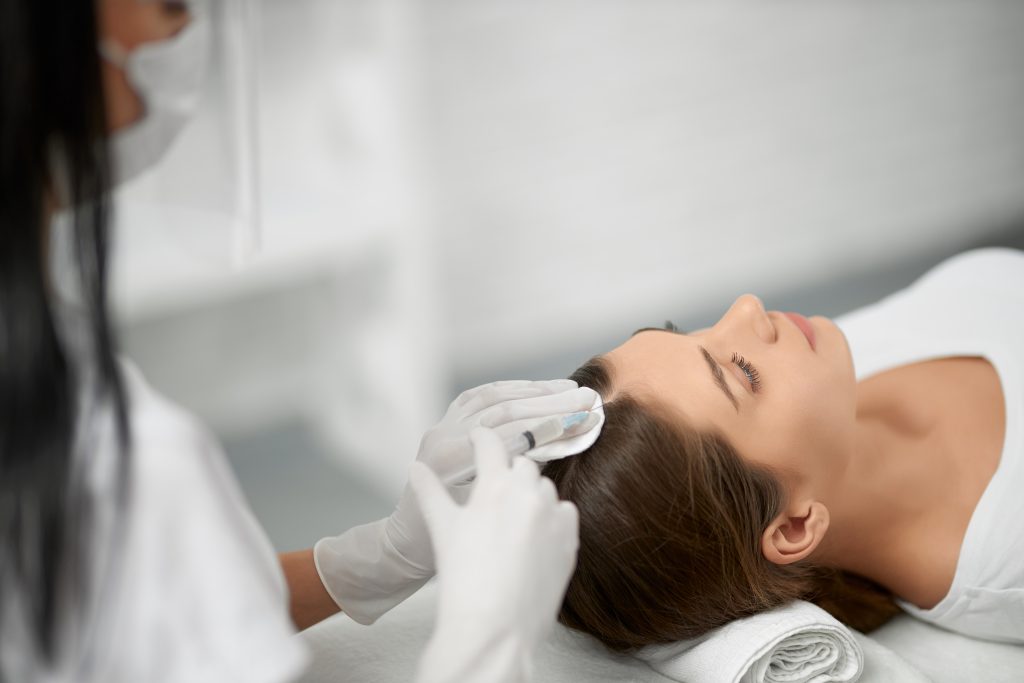
Platelet-Rich Plasma (PRP) therapy for hair loss is a non-surgical treatment in which a small sample of the patient’s own blood is drawn.
The blood is spun in a centrifuge to concentrate growth factors and injected directly into the scalp to stimulate dormant hair follicles and promote new hair growth.
A 2020 systematic review found 84% of studies on PRP for hair loss (male and female pattern baldness) showed positive results.
| PRP for hair loss in Women | PRP for hair loss in Men |
| Diffuse thinning pattern- treatment targets the entire scalp | Localized to the crown and hairline- targeted zones |
| Often combined with mesotherapy or LED for a synergistic effect | Often used standalone or with finasteride |
| Hormonal causes must be addressed concurrently for the best results | DHT suppression (minoxidil/finasteride) is a common co-treatment |
| Postpartum cases: may resolve naturally- PRP accelerates recovery | No equivalent hormonal trigger |
| Candidacy broader- most women with thinning qualify for PRP | Candidacy is similar, but the pattern differs |
Table 1: PRP for Women vs. PRP for Men
Expected Side Effects-
- Mild to Moderate Pain: Increased soreness or an “aching” sensation at the injection site is very common and typically peaks within the first 2 to 5 days as the healing cascade begins.
- Swelling and Redness: Localized swelling and inflammation are signs that the platelets are actively working.
- Bruising: Minor bruising may occur both at the injection site and the arm vein where your blood was initially drawn.
- Scalp-Specific Effects: For hair restoration treatments, temporary scalp tightness, minor itching, or pinpoint bleeding immediately after the sessions are common.
- Rare Risks: Though uncommon under sterile conditions, there are minimal risks of localized skin infection, temporary nerve irritation (tingling/numbness), or mild allergic reactions to any local anesthetic used.
Post-Procedure Guidelines-
- Do NOT take Ibuprofen (Advil, Motrin), Naproxen (Aleve), Aspirin, or Voltaren for at least 7 days (and ideally up to 4 to 6 weeks for musculoskeletal issues). These medications suppress the exact inflammation required for PRP to work.
- Avoid applying ice packs or direct heat to the injection area for the first 72 hours unless specifically cleared, as ice acts as an anti-inflammatory.
- Refrain from vigorous workouts, heavy lifting, or high-impact activities for 48 to 72 hours to allow the plasma to properly absorb into the target tissue.
- Avoid alcohol and heavy smoking for at least 3 days post-treatment, as they directly impair circulation, delay tissue regeneration, and reduce platelet effectiveness.
- Skip hot baths, saunas, steam rooms, and swimming pools for the first 48 hours to minimize infection risks. Showers are generally fine.
- Pause optional supplements like Vitamin E, Vitamin A, Omega-3 fatty acids, Ginkgo Biloba, and Garlic for 7 days.
After PRP treatment for hair loss, a certain timeline is required to get the expected progress-
- Reduced shedding is often noticed in the first 1 to 4 weeks
- Early new hair growth is visible at the hairline and part line in the next 2-3 months
- Noticeable improvement in density and thickness is observed in 4-6 months
- In 12 months, full results are observed, with 70-80 % of patients reporting significant improvements
- Maintenance sessions are effective every 4-6 months in order to sustain results
The clinical protocols for autologous plasma administration were developed and overseen by Dr. Joseph Doumit.
Hair Transplant for Women: A Complete Guide
Women can get hair transplants, but surgical candidacy is more selective than for men. Unlike male pattern baldness, female hair loss is often diffuse, which can compromise graft visibility.
Who is a good candidate for a hair transplant?
The candidates who are recommended for surgery are-
- Women with confirmed DPA
- Cases of traction alopecia with sufficient donor density
- Hairline recession or frontal thinning with a stable crown
- No active systemic conditions driving hair loss (thyroid, autoimmune, nutritional must be resolved first)
Candidates who are NOT recommended for surgery are-
- Women with DUPA, as transplanted follicles from an unstable donor zone will also be lost
- Active telogen effluvium, as surgery while shedding is active, produces unpredictable outcomes
- Scarring alopecias (lichen planopilaris, frontal fibrosing alopecia), active inflammation destroys grafts
- Insufficient donor density relative to the size of the recipient area
| FUE (Follicular Unit Extraction) | FUG (Follicular Unit Graft) |
| Individual follicles extracted with a micro-punch tool | A narrow strip of scalp was removed from the donor area |
| No linear scar, ideal for women wearing hair in different styles | Linear scar hidden beneath longer hair |
| Faster recovery; most women return to normal in 7–10 days | Slightly longer recovery, but can yield more grafts per session |
| Preferred for women due to no style restrictions post-procedure | Preferred when larger graft numbers are required |
| Extraction targeted at the strongest follicles in the donor zone | Full strip yields higher graft volume in one session |
| Capillaire MD’s primary technique for female patients | Available at Capillaire MD when clinically indicated |
Table 2: FUE vs. FUG As Hair Transplant For Women
Expected Side Effects-
- Scalp Swelling (Edema): Swelling is incredibly common, particularly around the forehead and eyes. It typically peaks on days 2 to 4 and is a normal response to the local anesthetic and fluid used during the procedure.
- Crusting and Scabbing: Tiny scabs will form around each individual transplanted graft within the first 24 to 48 hours. This is a healthy part of the healing process; they will naturally flake off within 7 to 10 days.
- Mild Pain and Tightness: You will likely feel soreness, a dull ache, or a tight sensation in both the donor area (usually the back of the head) and the recipient area for the first 3 to 5 days.
- Itching: As the tiny incisions heal and the skin dries out, moderate to intense itching is very common.
- Shock Loss (Temporary Shedding): Between weeks 2 and 6, you may notice both transplanted hairs and some surrounding native hairs shedding. This can be alarming, but it is a temporary, normal physiological response to tissue trauma. The hair roots remain completely intact, and new growth will begin in 3 to 4 months.
- Numbness or Tingling: Temporary nerve irritation can cause a minor loss of sensation or a “pins and needles” feeling on the scalp, which usually resolves on its own over a few weeks to a few months.
Post-Procedure Guidelines-
- Never pick, scratch, or rub the scabs. Doing so can easily dislodge the newly implanted hair grafts before they are permanently secured, leading to patchy results or infection.
- Avoid letting a high-pressure shower stream hit your scalp directly for the first 10 to 14 days.
- Do not sleep flat on your stomach or side for the first 3 to 5 nights. This worsens forehead swelling and increases the risk of accidentally rubbing the grafts against your pillow.
- Avoid intense cardio, heavy lifting, and any activity that causes heavy sweating for at least 10 to 14 days. Sweating and increased blood pressure can displace grafts or cause bleeding.
- Absolutely no blow-dryers, hair straighteners, extensions, hairsprays, or chemical hair dyes for at least 4 weeks. The harsh chemicals and heat can destroy fragile new grafts and irritate healing skin.
- Avoid exposing your scalp to direct, prolonged sunlight for the first 3 weeks to prevent sunburn on vulnerable tissue. Avoid tight-fitting caps or beanies for the first 10 days; if you must cover your head, use a very loose, structured hat that does not touch the recipient area.
- Refrain from smoking and drinking alcohol for 3 to 5 days post-op, as both severely restrict blood flow and oxygen delivery to the healing follicles.
- Sleep with your head elevated at a 30 to 45-degree angle using a recliner or a few firm pillows (a travel neck pillow works perfectly) for the first 3 to 5 nights to drastically reduce facial swelling.
- Starting around day 2 or 3 (per your clinic’s timeline), wash your hair by diluting a mild, sulfate-free baby shampoo in a cup of lukewarm water. Gently pour it over your head and rinse by pouring clean water from a cup. Pat dry softly with a paper towel, never rub with a bath towel.
- Stay on top of your clinic’s schedule for prescribed antibiotics (to prevent infection) and anti-inflammatory medications. If you experience mild discomfort, Acetaminophen (Tylenol) is typically recommended.
- Drink plenty of water and prioritize rest during the first week to support cellular repair and blood flow to the scalp.
Capillaire MD’s hair transplant for women begins with a collaborative pre-operative consultation and hairline design. On procedure day, local anesthesia is applied, and only the donor area is trimmed.
Lasting four to eight hours, follicles harvested via FUE or FUG are microscopically prepared, then implanted at precise angles mimicking natural female growth patterns.
Surgical hair restoration design and micro-grafting executions are guided by Dr. Joseph Doumit.
Note: FUE (Follicular Unit Extraction) with micro-incisions is a minimally invasive hair restoration technique. It eliminates the linear scar associated with older strip methods and involves extracting individual hair follicles, making it ideal for patients wanting to wear shorter hairstyles.
After hair transplant treatment, a certain timeline is required to get the expected progress-
- Redness or mild swelling is observed in the first 3 days
- In the next 10 days, you may observe scabbing (do not scratch!)
- You will observe transplanted hair shedding in the first 6 weeks (this is normal and expected in the treatment process)
- In the first 3 to 4 months, you will observe that new hair growth is beginning
- Hair will thicken and become denser in the first 9 months
- After 12 to 18 months, the final results will be visible with full density
| Your Situation | Recommended Starting Point | Next Step |
| Early thinning/widening of the part line | PRP Therapy (3 sessions) | Reassess at 6 months; add Mesotherapy if needed |
| Postpartum shedding | PRP+Mesotherapy (may resolve naturally) | Reassess at 9–12 months post-delivery |
| Stress or illness-related shedding | Mesotherapy (nutritional support) + PRP | Address underlying stressor; consider LED |
| Hormonal (PCOS, menopause) | Medical treatment first + PRP | Hormonal therapy coordination required |
| Traction alopecia (early) | PRP + Mesotherapy + style change | Hairstyle modification is essential for success |
| Traction alopecia (advanced) | Transplant evaluation (if donor area stable) | Candidacy assessment at Capillaire MD |
| Female pattern baldness (mild-moderate) | PRP+Minoxidil + Mesotherapy | Long-term maintenance protocol |
| Female pattern baldness (advanced, DPA confirmed) | Hair Transplant+PRP maintenance | Surgical candidacy assessment required |
| DUPA or diffuse loss (unstable donor) | Non-surgical only: PRP+Mesotherapy+LED | Transplant NOT recommended |
Table 3: Right Treatment For Your Hair Loss
To Summarize
Female hair loss is multifactorial, requiring accurate diagnosis before initiating treatment. For early-to-moderate thinning, PRP therapy serves as the leading non-surgical solution.
While hair transplants are highly effective for select, properly evaluated candidates, a combined, personalized approach consistently yields the best long-term results tailored to each patient’s unique needs.
Ready To Address Your Hair Loss?
Our Montreal hair loss specialists offer personalized consultations for women experiencing hair thinning or loss. In addition, the clinic serves patients from Laval, Brossard, and the surrounding regions of Quebec. Get an accurate diagnosis and a treatment plan tailored to your hair loss type. Make an appointment now!
Frequently Asked Questions
1. I feel like I have tried every topical serum and biotin supplement on the market, but nothing is stopping my hair from thinning. Why is it not working?
Topical serums and biotin supplements often fail to stop hair thinning because hair loss is largely driven by genetics, hormones, or systemic health issues.
Most over-the-counter options only treat the surface or assume a basic vitamin deficiency, completely missing the deep hormonal or genetic triggers of female pattern hair loss.
CapillaireMD uniquely solves this by using advanced cellular diagnostics to pinpoint your exact cellular profile, creating a medical-grade treatment plan that targets the root cause rather than wasting your time on generic fixes.
2.I want to look into medical treatments, but I am terrified of taking pills that might mess with my hormones or cause systemic side effects. Is there another way?
There are many ways to treat medical conditions without pills. Depending on your needs, options like targeted topical therapies, physical therapy, localized injections, or neuromodulation (which uses electrical impulses) treat specific areas directly.
CapillaireMD specializes in targeted, localized therapies, like our highly concentrated PRP (Platelet-Rich Plasma) protocols, that stimulate dormant follicles directly at the scalp level, giving you powerful, scientifically proven results without affecting your body’s natural hormonal balance.
3.I am absolutely terrified that if I get a hair transplant, it will look obvious. Can a transplant actually look natural on a woman?
The fear of a “fake” hairline keeps many women from seeking permanent solutions, as traditional transplant methods were originally designed for male hairlines.
CapillaireMD eliminates this fear through our proprietary micro-grafting technique, which meticulously mimics the soft, multidirectional, and staggered growth patterns unique to female hairlines for a completely undetectable result.
4.I have heard that stress and hormonal shifts can make hair loss worse. If I start a treatment program, am I just going to lose all my progress the next time my life gets chaotic?
The fear of temporary success is incredibly stressful, and stress itself creates a vicious cycle that triggers further shedding.
CapillaireMD breaks this cycle by providing a dynamic, long-term maintenance ecosystem that adapts to your body’s changing hormonal phases, ensuring your follicles remain protected and resilient against future lifestyle or biological stressors.
5. My hair loss is moving so fast that I am genuinely scared I will wake up one day with visible bald spots that I can no longer hide. Is it already too late for me?
It is rarely too late to treat hair loss. Rapid shedding is often highly distressing, but there are clinically proven treatments that can slow, stop, and even reverse hair loss.
CapillaireMD addresses this urgency with our cellular rescue protocols, specifically engineered to aggressively stabilize active shedding and revive failing follicles before they permanently atrophy, meaning it is rarely too late to take control.
