
What to Expect During Your First PRP Hair Treatment Session
Dealing with hair loss may lead you to think about whether or not PRP is a painful, lengthy, or worth-it process. The uncertainty regarding the procedure makes a lot of first-time patients worried.
Key Takeaways:
- 60–90-minute session: Includes consultation, blood draw, centrifugation, scalp preparation, and targeted injections.
- Minimal discomfort and downtime: Most patients experience mild-to-moderate discomfort and return to normal activities quickly.
- Personalized treatment plan: A CapillaireMD consultation helps assess your scalp, discuss your goals, and determine the right treatment and maintenance schedule.
Scheduling your first PRP hair treatment appointment is a big deal. You are bound to have questions.
Is it painful? How much time do you need? Will you see results right away?
This guide walks you through the entire experience, so you can walk into your appointment at CapillaireMD feeling confident, not anxious.
What to Expect at Your First PRP Hair Treatment
If you are considering PRP hair treatment (traitement cheveux PRP) for hair restoration, knowing what happens during your first session can help you feel prepared and confident.
Before diving into the treatment process, let us take a closer look at what PRP hair treatment actually involves and how it works.
What Is PRP Hair Treatment Exactly?
PRP (platelet-rich plasma) therapy for hair (also called PRP traitement cheveux) uses a concentrated portion of your own blood (rich in growth factors) to wake up weakened hair follicles.
The process happens in three stages:
- Blood draw: a small vial is taken from your arm, just like a routine lab test.
- Centrifugation: the blood spins at high speed, separating into red blood cells, platelet-poor plasma, and the golden, platelet-rich layer used for treatment.
- Injection: platelet-rich plasma hair injection (injection plasma cheveux) is injected into the areas of your scalp where hair is thinning.
Because the PRP treatment uses your own biological material, there is no risk of allergic reaction to a foreign substance, and downtime is minimal.
A little preparation before your appointment can help ensure a smooth and comfortable PRP treatment experience.
Before Your Appointment: How to Prepare
A little preparation goes a long way toward a smoother, more comfortable session.
In the week before-
- Stop blood thinners if your doctor approves. This includes vitamin E, fish oil, flaxseed oil, ginkgo biloba, and garlic supplements, which can thin blood and increase bruising or swelling.
- Stay hydrated in the days leading up to your visit. Well-hydrated veins make the blood draw faster and easier.
- Avoid alcohol for 24-48 hours before your session.
The day of your appointment-
- Eat a normal meal beforehand, as an empty stomach can cause lightheadedness during the blood draw.
- Wash your hair as usual, but skip heavy styling products, oils, or dry shampoo. A clean scalp helps the treatment go smoothly.
- Wear something you do not mind getting a small blood spot on, and clothing that will not need to go over your head afterwards.
- Arrive a few minutes early for your intake and consultation.
With these simple steps covered, you will be ready to walk into your appointment knowing what to expect from start to finish.
Your First Visit: What Actually Happens
Your first visit typically begins with the following steps to determine whether PRP hair therapy (plasma cheveux) is right for you-
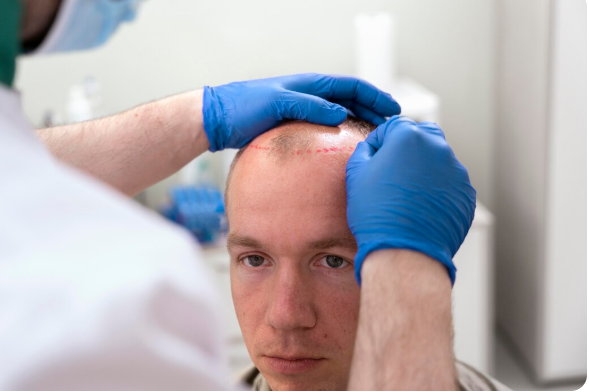
Step 1: Consultation and Scalp Assessment
Before any needle touches your skin, your provider reviews your hair loss pattern, medical history, and goals. This is also when contraindications are ruled out. Photos are often taken to track your baseline. These are useful later for measuring real progress.
Step 2: Blood Draw
A trained technician draws blood from your arm, typically 15- 60 mL depending on the treatment plan. This takes only a few minutes and feels like a standard lab test.
Step 3: Centrifugation
Your blood vial goes into a centrifuge and spins for around 10 minutes, separating it into three layers. The platelet-rich plasma layer is drawn off with a syringe.
Step 4: Numbing (Optional but Common)
Many clinics apply a topical numbing cream to the scalp 20-30 minutes before injections, or use a cooling/vibration device during the procedure to reduce sensation. Ask your provider what is available. This is one of the easiest ways to make your first session more comfortable.
Step 5: Injection
Using a fine needle, the plasma is injected in small, closely spaced points across the thinning areas of your scalp. A full session usually takes 20- 30 minutes of injection time.
Step 6: Aftercare Instructions
Before you leave, you will get written aftercare guidance, and your next appointment is booked. Most PRP plans call for 3 sessions spaced 4–6 weeks apart, followed by maintenance sessions every 4- 6 months.
Total time in the chair, start to finish, roughly takes 60- 90 minutes.
Now that you know what the appointment involves from start to finish, you may be wondering what the PRP injections actually feel like and whether the treatment is painful.
Does PRP for Hair Hurt?
This is the single most-searched question about PRP hair treatment (plasma cheveux), and it deserves a straight answer.
Most patients describe the sensation as-
- A quick pinch during the blood draw (identical to any blood test)
- Light pressure, stinging, or tingling during scalp injections
- More noticeable near the hairline and temples, where the skin is thinner
Pain tolerance varies, but the vast majority of patients rate the discomfort as mild to moderate, comparable to a series of small pinches rather than sharp, lasting pain. Numbing cream, cooling devices, and a skilled injector all make a real difference.
Once the injections are complete, most people can return to their normal routine with only minor, short-lived scalp effects to manage.
What to Expect in the First 24-72 Hours
Recovery from PRP hair treatment (PRP cheveux) is minimal, but a few things are completely normal-
Timeframe | What is Normal |
| First 3 to 6 hours | Avoid washing your hair, as you will observe mild redness or tenderness at injection sites |
| First 24 hours | Slight swelling or a “sunburned scalp” feeling Sleep with your head slightly elevated if it helps |
| 24 to 72 hours | Redness fades, and you can resume normal hair washing and light activity |
| First week | Skip intense workouts, saunas, swimming pools, and alcohol Avoid coloring or chemically treating hair |
Table 1: Timeline for PRP hair treatment stages
Most people return to work, school, or errands the same day. There is no bandaging, no stitches, and no visible sign you had anything done beyond mild redness that fades within a day or two.
With minimal downtime and side effects that typically settle quickly, the next question is naturally:
When can you expect to see noticeable improvements in your hair?
When Will You See Results?
This is where patience matters. PRP works with your natural hair growth cycle, so nothing changes overnight.
- Weeks 1-4: Many patients notice less shedding when brushing or washing, often the earliest sign the treatment is working.
- Weeks 6-8: Hair may start feeling slightly thicker in texture.
- Months 3-6: This is when visible density and new growth typically become noticeable, especially after your second and third sessions.
- After the full series (3 sessions): Clinical studies on PRP for androgenetic alopecia have shown meaningful improvements in both hair count and hair thickness after a completed series, with continued gains maintained through periodic touch-ups.
Results build cumulatively. The first session lays the groundwork, but sessions two and three are what typically deliver the visible change people are looking for.
How Many Sessions Will You Need?
A single session can start stimulating follicles, but it is rarely the full picture. The standard, evidence-based protocol is:
- Initial series: 3 sessions, spaced 4-6 weeks apart
- Maintenance: 1 session every 4-6 months to sustain results
Your exact plan depends on the stage and pattern of your hair loss, which is why the initial consultation matters. It is where your provider builds a protocol around your scalp, not a generic template.
Are You a Good Candidate for PRP?
Let’s find out if PRP will actually work for you.
PRP tends to work best for:
- Early-to-moderate androgenetic alopecia (pattern hair loss)
- Thinning that still has some active follicles present (not fully bald, scarred areas)
- Telogen effluvium and diffuse thinning
- People looking to boost graft survival before or after a hair transplant
PRP may not be recommended if you have:
- Active scalp infections or skin disease at the injection site
- Certain blood disorders or clotting conditions
- A very low platelet count
- Active chemotherapy or certain immunosuppressive treatments
- Pregnancy (as a precaution, most clinics will postpone treatment)
This is not a self-diagnosis checklist. It is exactly what your consultation at CapillaireMD is for. A quick chat with a specialist will confirm whether PRP is the right fit, or whether a different approach makes more sense.
If PRP is not the right fit for your needs, there are other hair restoration options worth considering, each with its own benefits, limitations, and ideal candidates.
PRP vs. Other Hair Restoration Options
Hair PRP (PRP capillaire) is powerful, but it is not the only tool, and it is often more effective when combined with others.
Here are some treatment options for hair restoration-
| Treatment | Best For | Downtime |
| PRP (plasma cheveux) | Stimulating existing follicles, boosting density | None to minimal |
| LED Therapy | Low-level light stimulation, often paired with PRP | None |
| Mesotherapy | Delivering vitamins/nutrients directly into the scalp | None |
| Hair Transplant | Advanced or localized baldness, permanent relocation of follicles | Several days |
Table 2: PRP vs. Other Hair Restoration Options
Many CapillaireMD patients combine PRP with LED therapy or mesotherapy for a layered approach. This is something worth discussing at your consultation.
In Conclusion
A first PRP hair treatment typically takes 60-90 minutes and includes a consultation, blood draw, centrifugation, scalp preparation, and targeted injections. Discomfort is usually mild to moderate, with minimal downtime afterwards.
Results develop gradually over several months, and most patients need a series of treatments followed by periodic maintenance sessions.
Ready To Find Out Whether PRP Is Right For Your Hair Loss?
Schedule a consultation with our specialists at CapillaireMD to discuss your goals, assess your scalp, and create a personalized treatment plan. Take the next step toward healthier-looking, fuller hair with guidance tailored to your needs and condition. Contact us today at 5144003291!
Frequently Asked Questions
- Is PRP Hair Treatment Safe, Or Could I Get An Infection Or Allergic Reaction From The Injections?
Because the procedure uses your own blood plasma, the risk of contamination, infection, or adverse allergic reactions is significantly reduced. Additionally, all consultations and procedures at our clinic are performed by specialized hair loss dermatologists to ensure maximum medical safety.
- Will The PRP Injection Process Cause Severe Pain Or Create Major Surgical Lesions On My Scalp?
PRP is a non-invasive, non-surgical alternative to procedures like hair transplants, with dermatologists administering injections without creating major scalp lesions. While mild, temporary irritation or scalp sensitivity can occur, the procedure is minimally invasive and designed for smooth patient comfort.
- How Can I Fit PRP Treatment Sessions Into My Busy Work Schedule Without Taking Long Time Off?
Unlike hair transplants that require weeks of recovery, PRP involves zero downtime, allowing you to resume daily activities immediately, even during a lunch break. Our clinic also maintains convenient weekday hours from 9:00 AM to 5:00 PM to accommodate your appointments.
- I Have Tried Other Hair Treatments That Did Not Work. How Does PRP Address Thinning Hair At The Root Level?
PRP concentrates natural growth factors from your blood to directly stimulate inactive hair follicles and increase hair shaft thickness over a structured 3-session initial plan (spaced 4 to 6 weeks apart). Our clinic also offers complementary treatments, such as LED therapy and Mesotherapy, which our professional dermatologists can combine for optimal results.
- I Am Unsure If My Hair Loss Type Can Actually Be Treated. How Do I Know If PRP Is Right For My Condition?
Our clinic provides specialized consultations with hair loss dermatologists who diagnose specific conditions, such as Androgenetic Alopecia, Telogen Effluvium, or Traction Alopecia. Dermatologists in our clinic will determine if PRP or a custom combination of hair loss procedures is the most effective path forward for your specific case.
