
Who Can Benefit from PRP Injections for Hair Regrowth?
Platelet-Rich Plasma (PRP) therapy is Montreal’s leading non-surgical solution for hair loss. By using your body’s own concentrated growth factors, PRP reactivates dormant follicles, stimulates blood flow, and increases hair density. Ideal for busy professionals, this natural, low-downtime treatment offers safe, effective regeneration without invasive surgery.
Key Takeaways:
- Natural Non-Surgical Solution: PRP uses your blood’s natural growth factors to reactivate dormant follicles, boost circulation, and thicken existing hair with no downtime.
- Best for Active Follicles: Ideal for early thinning, stress-induced shedding, or hair transplant support, though active hair follicles are required to see results.
- Local In-Clinic Assessments: Tailored regrowth plans are available via personalized consultations with CapillaireMD across 8 convenient clinic locations in Greater Montreal, Gatineau, and Ottawa.
Platelet rich plasma injections, also known as PRP, work best for men and women in good general health who notice early to moderate hair thinning. They are especially effective for androgenetic alopecia, telogen effluvium, postpartum shedding, and as a booster alongside a hair transplant. They are not effective on fully bald patches, and are not recommended for people with certain blood disorders or active scalp infections.
Wondering if you are a good candidate? Here is everything you need to know before booking.
Who Is an Ideal Candidate for PRP Hair Regrowth?
Before exploring how PRP injections work, it is important to understand who may benefit most from PRP hair regrowth and whether this treatment is suitable for your specific hair-loss concerns.
30-Second Scalp Self-Check: Are Your Follicles Still Active?
Before booking, take a close look at your thinning areas under bright light:
- Active (Good Candidate): You see fine, short, or baby hairs (vellus hair) in the thinning area, or the scalp is visible but not completely shiny.
- Inactive (Not a Candidate): The area is completely slick, smooth, and shiny with zero visible pores or fuzz. (PRP requires living roots to work).
What Are Platelet Rich Plasma Injections?
Platelet rich plasma injections are a medical treatment. They use your own blood to trigger natural hair regrowth. You may also see this treatment called platelet-rich plasma hair therapy (injection plasma cheveux).
The concept is simple:
- Blood is drawn from your arm.
- It’s spun in a centrifuge to isolate the platelet-rich plasma.
- That plasma is injected into the areas of the scalp that need it.
Platelets release growth factors (PDGF, VEGF, TGF-B). These factors wake up weakened hair follicles. They also boost local blood circulation.
The result: thicker, denser hair, and slower shedding.
For the full step-by-step protocol, see our PRP (platelet-rich plasma) page.
Who Can Benefit from Platelet Rich Plasma Injections?
Here is the good news. Most people dealing with hair thinning are good candidates.
Below are the profiles that benefit most-
- Men with androgenetic alopecia (male pattern baldness)
This is the most well-documented use of PRP. It works best in the early stages of pattern baldness, when follicles are miniaturized but still alive with-
- Receding temples
- Thinning crown
- Receding frontal hairline
The earlier you start, the better the results tend to be.
Learn more about androgenetic alopecia.
- Women with diffuse thinning or female pattern hair loss
In women, hair loss often shows up as diffuse thinning, especially along the part line.
Platelet rich plasma injections help by-
- Densifying existing hair
- Slowing the progression of shedding
- Improving the thickness of the hair shaft
No surgery. No downtime.
- People experiencing telogen effluvium (stress-related shedding)
Physical or emotional stress can trigger diffuse shedding, often weeks after the triggering event. PRP can speed up recovery and help stabilize the hair growth cycle.
See our page on telogen effluvium to understand the causes.
- New moms (postpartum hair loss)
Hormonal shifts after childbirth often cause noticeable, temporary shedding. PRP supports natural regrowth once hormone levels stabilize, typically after breastfeeding ends.
- People looking for a non-surgical alternative
For patients seeking an effective option without surgery, PRP hair injections require:
- No incisions
- No general anesthesia
- No extended recovery time
You go right back to your normal activities after each session.
- Patients pairing PRP with a hair transplant
PRP is not just for mild cases.
It is also used before, during, or after a transplant to-
- Support healing
- Improve graft survival
- Densify both donor and recipient areas
Combine PRP with a hair transplant for effective PRP hair treatment (cheveux injection plasma) to get the most out of your results.
- People with mild traction alopecia or localized alopecia areata
If the affected area is small and follicles are still present, PRP can help speed up recovery.
Note: Also consider the traction alopecia and alopecia areata pages on our Alopecia hub.
- People already using minoxidil or finasteride
Already on an oral or topical treatment?
PRP pairs well with these options. It does not interrupt your current routine; it reinforces it.
Who Should Not Consider Platelet Rich Plasma Injections?
Being upfront about a treatment’s limits is part of good medical care.
Platelet rich plasma injections are not recommended if any of the following apply to you-
| Situation | Why PRP Is Not Recommended |
| Completely bald area (no active follicles) | PRP stimulates existing follicles; it cannot create new ones. |
| Blood clotting disorders or blood diseases | Poses a higher risk of complications during and after injections. |
| Taking blood thinners (without prior clearance) | Increases the risk of excessive bleeding and severe bruising |
| Active scalp infection or skin condition | Injections risk spreading the infection across the scalp. |
| Active cancer or ongoing treatment | Requires explicit medical clearance from an oncologist beforehand. |
| Pregnancy | Postponed until after delivery as a medical precaution. |
| Unrealistic expectations | PRP thickens hair and slows shedding; it cannot replicate hair transplant results for advanced baldness. |
Table 1: Limitations of PRP Injections
Note: If you are unsure whether your hair follicles are still active, a clinical evaluation is essential. CapillaireMD offers consultations across our clinics in Montreal, Gatineau, Laval, Ville Mont-Royal, Ottawa, Saint Jean sur Richelieu, South Shore, and West Island.
Signs It Is Time to Book a Consultation
Do not wait for things to get worse. Watch for these signals-
- More hair than usual on your brush or in the shower
- Your part looks wider than it used to
- Your scalp is more visible under direct light
- Your hair feels thinner than it did a year ago
- You have a family history of hair loss
The earlier you get a diagnosis, the more treatment options you have and the more noticeable the results.
Pre-Treatment Preparation Checklist
Preparation is key to successful PRP therapy sessions.
1.Hydrate Aggressively (48 Hours Before)
Ensure easy blood draw and higher plasma yield.
Drink at least 2 liters of water per day for two days prior to your appointment. Dehydration makes veins harder to find and yields less plasma.
2. Pause NSAID Medications (7 Days Before):
Crucial for platelet function.
Stop taking blood-thinning over-the-counter pain relievers like Ibuprofen (Advil, Motrin), Naproxen (Aleve), or Aspirin 7 days before your session, as they inhibit platelet activity. (Use Acetaminophen/Tylenol if needed).
3.Avoid Alcohol & Heavy Smoking (48 Hours Before)
Protect growth factor quality.
Refrain from alcohol and excessive nicotine for 48 hours prior, as toxins impair cell recovery and platelet efficiency.
4.Wash Your Hair the Morning Of
Maintain a sterile scalp environment.
Wash your hair with a mild shampoo on the day of treatment. Do not apply hair gels, fibers, hairsprays, or leave-in conditioners.
How a Session Works at CapillaireMD
The PRP hair regrowth process at CapillaireMD is simple, quick, and guided by a multidisciplinary team.
Your PRP treatment process includes-
- Initial consultation: Your provider will assess your type of hair loss, discuss your concerns, and understand your goals for treatment.
- Blood draw: A small sample of your blood is taken, similar to a routine blood test.
- Centrifugation: The blood sample is placed in a centrifuge to separate and concentrate the platelet-rich plasma. This process usually takes only a few minutes.
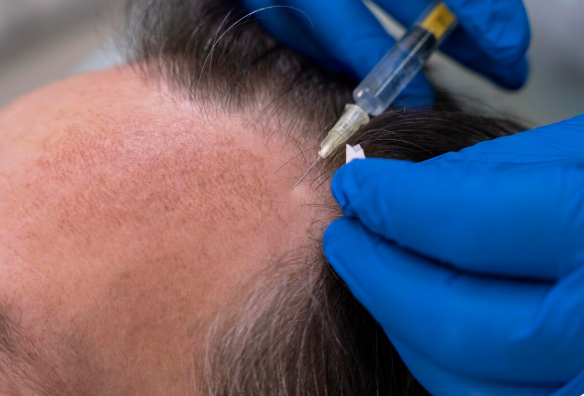
- Targeted injection: The concentrated plasma is carefully injected into the areas of the scalp where hair regrowth is being targeted using a fine needle.
- Return to your day: Once the treatment is complete, you can generally return to your normal activities without significant downtime.
What Does It Feel Like?
- Discomfort Level: Most patients rate the sensation a 2 to 3 out of 10.
- How it Feels: Tiny, quick pricks similar to an eyebrow pluck or light pinch.
- Comfort Measures: Clinics use localized chilling air, vibration distracting devices, or topical numbing spray to make the 10-minute injection phase as painless as possible.
A typical PRP hair treatment session takes approximately 30 to 45 minutes.
How Many Sessions Do You Need, and What Should You Expect?
The injection of plasma into the scalp stimulates dormant follicles to promote natural hair regrowth.
Every case is different, but here is the general pattern seen across hair clinics for injection plasma:
- Initial phase: 3 to 4 sessions, spaced 4 to 6 weeks apart
- First visible signs: Typically between 2 and 4 months
- Maintenance: 1 to 2 sessions per year, depending on your response
Platelet-Rich Plasma (PRP) therapy results may vary depending on individual health status, age, and the stage of hair loss. A full medical evaluation by a qualified professional is required prior to starting treatment.
That is why a personalized evaluation is essential before estimating a session count or budget.
Post-Treatment Aftercare Protocol (First 48 Hours)
To maximize growth factor absorption and protect your scalp, follow these rules:
- DO: Keep your scalp clean and stay hydrated. You can gently wash your hair with lukewarm water after 24 hours.
- ON’T Wash Hair for 24 Hours: Let the active plasma absorb fully into the micro-channels created by the needles.
- DON’T Sweat or Exercise for 48 Hours: Avoid intense workouts, saunas, steam rooms, and hot tubs to prevent inflammation or infection.
- DON’T Apply Hair Dye or Harsh Chemicals: Wait at least 7 days before coloring your hair or using harsh chemical treatments.
- DON’T Take Anti-Inflammatories for 3-5 Days: Mild swelling or tenderness is normal—this is the active healing response. Taking Advil or Ibuprofen suppresses the exact growth factors you just paid to inject.
Month-by-Month Realistic Results Timeline
Given below is a realistic timeline during which you will start to see results.
Shedding Reduction & Follicle Activation
Month 1 (Weeks 1-4)
What to Expect: New hair growth takes time, so you will not see immediate density changes in the first 30 days.
- Primary Milestone: A noticeable drop in daily hair shedding in your brush, pillowcase, and shower drain.
- Biological Process: Growth factors increase micro-circulation around the scalp, shifting resting (telogen) follicles back into the active growth (anagen) phase.
Improved Texture & Early Hairline Fuzz
Months 2-3 (Weeks 5-12)
What to Expect: Following your 2nd and 3rd sessions, existing hair shafts begin to thicken and strengthen.
- Primary Milestone: Fine “baby hairs” (vellus hair) begin appearing along your hairline, temples, or part. Existing hair feels less brittle and holds volume better.
- Biological Process: Miniaturized hair follicles receive increased nutrient supply, causing individual hair strands to expand in diameter.
Peak Density & Scalp Coverage
Months 4-6
What to Expect: This is the phase where the cumulative benefits of your initial treatment protocol (3 to 4 sessions) become visually dramatic.
- Primary Milestone: Scalp visibility under direct light decreases significantly. Hair coverage is noticeably denser in photos, and part lines appear tighter.
- Biological Process: Reactivated follicles reach sustained growth, producing mature, pigmented terminal hair strands.
Long-Term Maintenance Phase
Months 12+
What to Expect: Because PRP does not change your underlying genetics or hormones, periodic touch-ups are necessary to sustain results.
- Primary Milestone: Preserving peak hair density long-term without returning to your baseline thinning state.
- Biological Process: 1 or 2 booster sessions per year counteract the ongoing effects of DHT, stress, and aging on your hair roots.
In Summary
PRP therapy is a non-surgical treatment that utilizes your blood’s natural growth factors to reactivate dormant hair follicles, boost circulation, and increase density.
Ideal for early thinning, stress shedding, or transplant support, it thickens existing hair without downtime. However, active follicles are required, making it ineffective on completely bald areas.
Ready To Restore Your Hair’s Natural Density?
Do not wait until thinning progresses. Early intervention yields the best results. Schedule your personalized consultation with the expert medical team at CapillaireMD today. Visit one of our 8 convenient clinic locations across Greater Montreal, Gatineau, and Ottawa to start your tailored regrowth journey!
Frequently Asked Questions
- Is PRP Hair Therapy Safe If I Am Sensitive To Harsh Synthetic Chemicals Or Allergic Reactions?
Anyone seeking a natural solution can benefit, as CapillaireMD uses your own blood tissue processed through a quick 10-minute centrifuge separation to ensure safety. Our specialized hair loss dermatologists deliver these safe injections without foreign synthetic risks, either as a standalone treatment or alongside other therapies.
- Can PRP Help If My Hair Is Thinning Due To Poor Scalp Blood Circulation?
Individuals struggling with thinning hair shafts and reduced scalp circulation can directly consider CapillaireMD’s PRP therapy. The injections trigger natural hair growth and maintain it by increasing blood supply directly to the hair follicle and increasing hair shaft thickness.
- Can PRP Work If Other Hair Loss Treatments Or Medications Haven’t Worked For Me?
Patients who need a versatile, multi-angled treatment plan will benefit from CapillaireMD’s flexible hair care approach. Our dermatologists can administer PRP alone or integrate it directly with hair transplantation, mesotherapy, LED treatments, or prescription medications.
- How Do I Choose A Qualified Hair Loss Dermatologist Nearby?
Look for board certification, check patient reviews for chronic hair loss success, and ensure their local clinic offers advanced diagnostics. Patients in Montreal, Gatineau, and Laval struggling to find expert medical care can find CapillaireMD’s specialized hair loss clinic.
Our team of specialized hair loss dermatologists provides expert consultation and structured treatment schedules tailored to your scalp restoration needs.
- Can PRP Therapy Help Treat Traction Alopecia Or Stress-Related Hair Loss?
Yes. Patients experiencing hair loss from physical stress, tension, or traction (such as Traction Alopecia or Telogen Effluvium) benefit significantly from PRP therapy. The injections increase localized blood flow and deliver concentrated growth factors directly to stressed follicles, accelerating recovery and encouraging new growth.
