
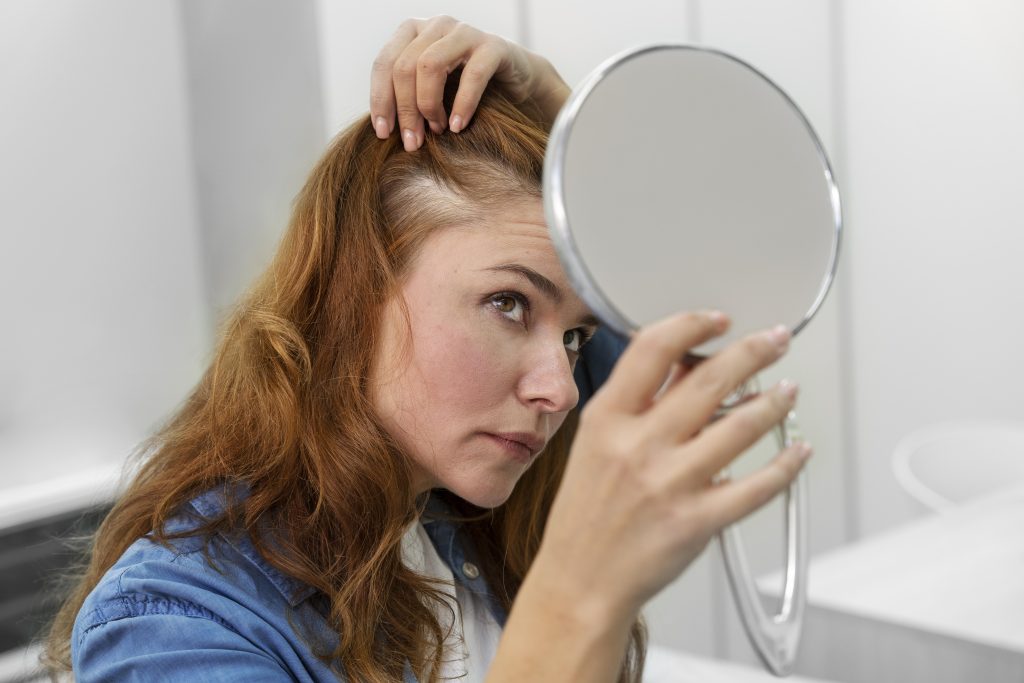
Hair loss is one of the most common issues that men and women face. Losing hair might impact your self-image and confidence. In the following discussion, you will learn about ways to deal with hair loss.
If you are suffering from extreme hair loss issues, then there might be several reasons for hair loss. Hormonal imbalance, infection in the scalp, stress, and nutritional deficiencies might be the reasons.
Whatever the issue might be, you need to consult a professional as early as possible. With early diagnosis of the issue, you can start your treatment sooner. So, you may restrict hair loss at an early stage.
Medical Evaluation to Identify the Root Cause
If you want to evaluate the causes of hair loss, you need to get yourself diagnosed as soon as you can. Even if you understand that you might be losing hair than usual, you should get yourself checked immediately.
The doctor might prescribe you some tests to see if your hormone levels are natural or if there might be some hormonal imbalance. Your dermatologists might also suggest that you get a scalp biopsy done to determine the type of alopecia.
Upon diagnosis, the doctors can determine if you have been affected by an autoimmune disease. For example, alopecia areata, an autoimmune disease in which the immune system attacks the hair follicles of the patient. It causes sudden and patchy hair loss.If you consult with a dermatologist as early as possible, you might get hair thinning solutions at the earliest.
Now, let’s look at some important solutions for patchy or circular hair loss.
1. Corticosteroid Therapy for Inflammation Control
In some autoimmune diseases, the immune system of your body fights the hair follicles instead of an infection in your body. If you are suffering from such an autoimmune disease, you will lose hair than normal. Your dermatologist will be the one to detect and identify if the causes of hair loss are autoimmune disease. If yes, he might prescribe corticosteroid therapy.
The corticosteroid treatment might be done in different ways – topical or injections. The dermatologist will either prescribe a topical corticosteroid cream or foam or use a corticosteroid injection directly into the scalp.
It can be an effective hair-thinning solution against autoimmune disease.
2. PRP Therapy to Stimulate Follicle Regrowth
Platelet-rich plasma therapy, or PRP therapy, has shown effective results in treating hair loss. The treatment uses a completely natural way of promoting hair growth by activating dominant follicles in your scalp.
First, a blood sample is taken from your body, and platelets are separated from the blood using centrifugation. The platelets, which are rich with growth factors, are then injected into the scalp to influence the hair follicles to grow. PRP is a way of hair regrowth without surgery.
If your dermatologist thinks that your hair follicles are not permanently damaged, then he might prescribe a PRP treatment. Get in touch with a dermatologist for PRP treatment in Cheveux (traitement cheveux prp).
3. Mesotherapy for Targeted Scalp Revitalization
It is another non-surgical process of treating hair loss issues. If your dermatologist detects that your hair loss issue can be treated without using non-surgical procedures, then mesotherapy can be used.
It involves injecting a mix of minerals, vitamins, amino acids, and several substances that promote the growth of hair follicles. The dermatologist might use microneedles or fine needles and deliver the solution in the mesoderm layer of the scalp. The injection is given in such a space that is close to the hair follicles to promote their growth.
You can also call it a hair density improvement treatment, as it supports hair regrowth.
4. Topical Medications
Minoxidil is a well-known name in the treatment of hair loss. It has several benefits to promote the growth of hair on your scalp. Minoxidil is a vasodilator that works by increasing blood flow in the scalp, follicle revitalisation, and extending the growth phase of hair.
As the blood flow increases in the follicles, it helps deliver more oxygen and nutrients, promoting hair growth. At the same time, it helps shorten the resting phase of the hair cycle and extends the active growth phase.
Similarly, immunotherapy can also be applied to battle hair loss. In this process, a chemical is applied to the bald patches. The chemical works by creating an allergic reaction on the scalp and redirects the immune system’s attack from the follicles to the allergic reaction caused by the chemical.
The treatment might be lengthy and requires consistency. For the first day, the dermatologist might apply the chemical to your scalp and cover the area for 48 hours. Afterwards, you will have to visit the clinic weekly to continue the treatment.
As your immune system shifts its attack from hair follicles to the chemical-induced reactions, they start regaining their health and promote hair growth.
5. Low-Level Light Therapy
If you are looking for a non-invasive hair loss treatment, then low-level laser light can be an option for you. It uses low-intensity laser light on the scalp, and it stimulates hair follicles to boost blood circulation and promote hair growth. As a result, you will have the opportunity to nourish your hair follicles and gain thicker and healthier hair.
The treatment is also called LED scalp therapy, as it uses LED lights to boost hair growth and help regrow hair. Another benefit of the treatment is that you can visit a clinic and get the therapy done under a professional, or get a device and start the treatment in your home.
6. Lifestyle & Nutritional Interventions
If you are under continuous stress, it triggers the release of cortisol in your body. This stress hormone causes inflammation in your hair follicles and reduces blood flow in the scalp, resulting in hair loss.
A balanced diet is also necessary for regrowing hair. Your dermatologist might advise you to take vitamins B, A, C, D, and E. At the same time, you should also take iron, zinc, and Omega-3s. These vitamins and minerals help improve keratin production, increase blood flow, and improve follicle growth.
When Patchy Hair Loss May Need Specialized Care
Patchy hair loss is not normal, and it may be a sign of an autoimmune disorder. If you see a sign of patchy hair loss, get in touch with a dermatologist as soon as possible.
If your dermatologist thinks that there is a nutrient deficiency and also a requirement for specialised care, then you may consider a combination therapy.
Choose the Right Treatment for Your Condition
Hair loss treatment might involve surgeries, if you go for a hair transplant. However, if you want hair regrowth without surgery, you need to consult with a dermatologist. The above-mentioned therapies might be an excellent choice for you to treat your hair loss issue.
Frequently Asked Questions
Yes, hair loss and alopecia are the same thing. Alopecia is the Latin term for hair loss. It is mainly used in medical science to refer to the hair loss issue.
No, shaving your hair will not help regrow your hair if you have patchy or circular hair loss. Hair growth depends on the health of hair follicles that lie in your scalp. You may shave the hair for personal reasons, but it will not help regrow hair.
Some alopecia might be a result of scalp infection, stress, or might be passed down through genetics. If your alopecia is genetic, your children might suffer from the same issue.
